Here’s a question worth sitting with for a second: you’ve got a genuinely good product. Maybe even a great one. So why isn’t the phone ringing?
Nine times out of ten, it’s not the product. It’s that nobody who needs it actually knows it exists yet. That’s the entire problem lead generation is trying to solve, and it’s why so many businesses eventually end up paying someone else to handle it rather than figuring it out through trial and error on their own dime.
So What Does “Lead Generation Service” Actually Mean?
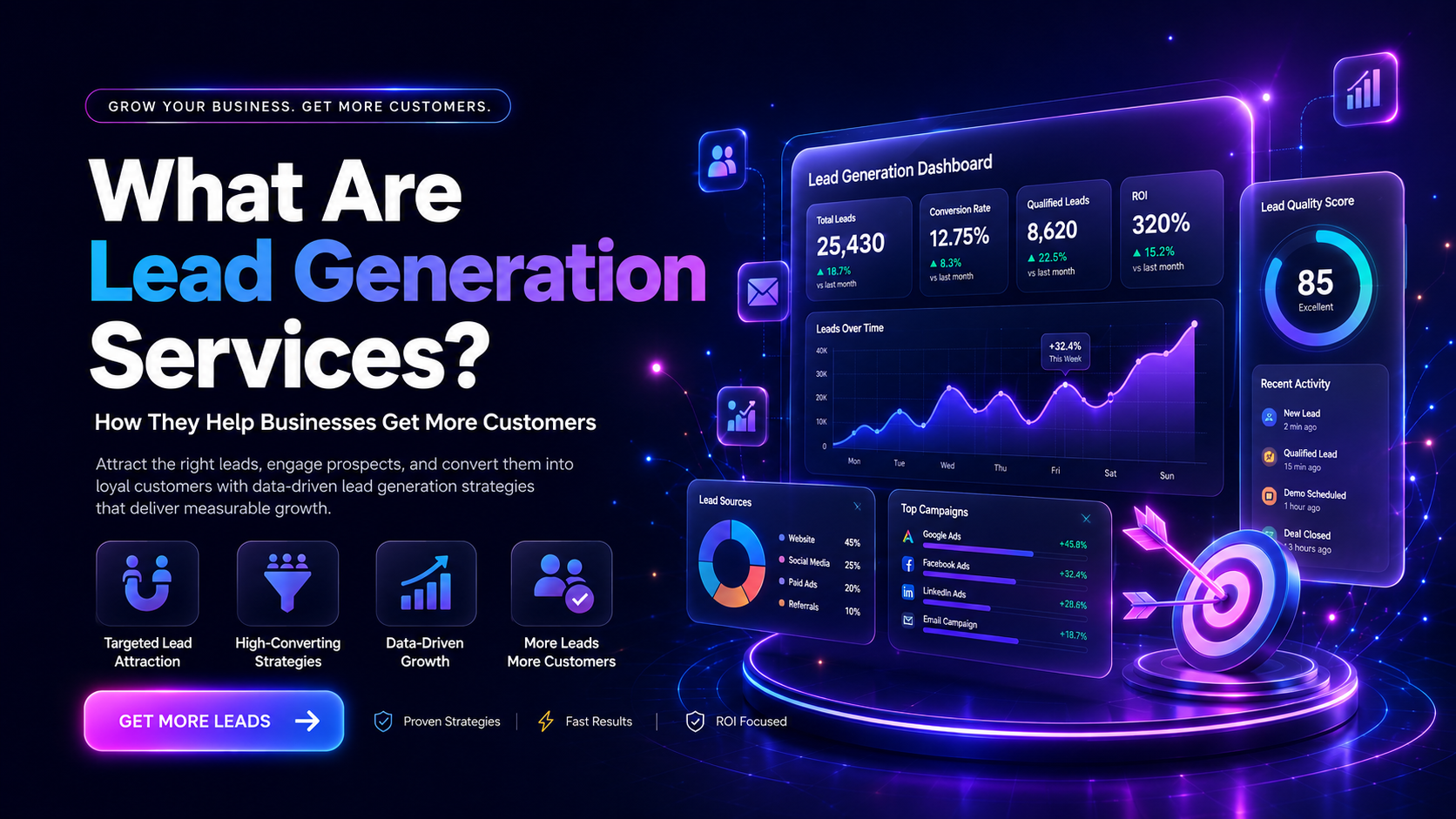
Strip away the jargon and it’s pretty simple. Lead generation is the process of finding people who might actually want what you’re selling, and then getting enough of their information — a name, an email, maybe a phone number — to start an actual conversation with them. A lead generation service is a company that does this work for you instead of leaving it to whoever on your team has five spare minutes between other tasks.
Picture the old-school way of doing sales: cold-calling a list of random numbers, hoping one in fifty picks up and doesn’t hang up immediately. Now compare that to reaching out to someone who already downloaded your free guide last week, or clicked on an ad because the headline actually spoke to their problem. Same goal, completely different starting point. One’s a cold lead. The other’s warm, sometimes even hot. And that difference is basically the whole business model behind lead gen as a service.
Not every agency approaches this the same way, by the way. Some live and breathe SEO and content. Others are all about outbound — emails, LinkedIn messages, that kind of thing. A lot of the better ones mix both, because relying on a single channel is a little like putting all your eggs in one basket that you don’t fully control.
How the Whole Thing Actually Works
Before any campaign goes live, there’s usually a fair amount of groundwork. Who’s the actual buyer here? What industry are they in, what size is their company, what’s keeping them up at night? Skip this step and you end up marketing to “everyone,” which in practice means you’re marketing to nobody in particular — the message gets so watered down it doesn’t land with anyone.
Once that’s sorted, the actual process tends to move through a handful of stages, though it rarely looks as clean and linear as it sounds on paper:
First comes attention — getting in front of the right people through content, SEO, ads, social, whatever fits the industry. Then capturing that interest, usually through a landing page or a form or maybe a chatbot, something that turns a random visitor into someone whose contact details you now have. After that, qualifying — because let’s be honest, not everyone who fills out a form is ready to buy, and chasing every single one wastes a sales team’s time. Good services score leads so the reps aren’t stuck talking to people who were just browsing. Then nurturing, which is really just staying in touch until someone’s actually ready — through emails, retargeting, the occasional follow-up call. And finally, handoff to sales, ideally with enough context that the rep isn’t starting from a blank slate.
Honestly, the whole thing works a bit like farming. You don’t scatter seeds everywhere and hope for rain. You prep the soil, plant with some intention, keep watering, and then — eventually — you harvest.
The Different Flavors of Lead Generation
There isn’t one single “correct” method here, which is sort of the whole point of bringing in a service instead of copy-pasting a generic template you found online.
- Inbound — content, SEO, social media, the stuff that draws people toward you gradually, over weeks or months rather than overnight.
- Outbound — cold email, cold calls, direct messages. More pushy, faster to start, but it takes real skill to not come across as spammy.
- Paid — Google Ads, Meta Ads, LinkedIn Ads. Quick results, but you’re paying for every click, so the cost adds up fast if the targeting’s off.
- Account-based marketing — going after specific, high-value companies with tailored campaigns rather than casting a wide net. Common in B2B, especially for bigger-ticket deals.
- Referral-based — leaning on existing happy customers or partner businesses to bring in new leads organically.
Most agencies worth their salt won’t pick just one lane. A digital marketing agency like Technoholic, for instance, will usually blend inbound work with paid campaigns depending on what the client sells and how quickly they need results — because betting everything on one channel is risky. If that channel has a bad month, your entire pipeline goes quiet with it.
Why Bother Outsourcing This At All?
Fair question. Couldn’t a business just… do this itself?
Technically, sure. Practically, it’s a lot harder than it looks from the outside. Marketing and sales teams already have full plates — asking them to also run a full lead-gen operation on top of everything else is asking for burnout, or at best, a half-hearted effort that never gets the attention it needs.
There’s the expertise gap too. What worked on Facebook two years ago barely moves anything today — the platforms shift, algorithms change, and buyer habits don’t stay still either. A team that’s neck-deep in this stuff every day for multiple clients tends to notice these shifts a lot faster than a generalist marketer juggling five other responsibilities.
Cost is the other piece people don’t always expect. Hiring, training, and keeping an in-house team — plus paying for all the software, ad management tools, and analytics platforms — often ends up pricier than just outsourcing to a service that already has all of it running. And speed matters too. A business figuring this out from scratch is going to burn a few months just testing what works and what doesn’t. A service that’s run similar campaigns before skips most of that guesswork.
Picking the Right One (Because Not All Are Equal)
This part matters more than people give it credit for. A bad choice here doesn’t just waste money — it can actively set your growth back.
Start by checking their track record in your specific industry, not marketing broadly. An agency that’s crushed it for e-commerce brands might genuinely have no clue how a long, complicated B2B SaaS sales cycle works — and that mismatch shows up in the results within a month or two.
Ask them how they actually define a “lead.” This trips up more businesses than you’d think. Some agencies will happily send you hundreds of leads a month that go nowhere, simply because they’re optimizing for volume instead of quality. What you actually want is fewer, better leads — people who are realistically close to buying, not just names on a spreadsheet.
Transparency is another thing worth pushing for. You should be able to see, at any point, what campaigns are live, what they’re spending, and how each one is performing — not get handed a vague summary once a month and told to trust the process.
And maybe the most underrated factor: how well do they actually communicate? Lead generation isn’t something you set up once and walk away from. It needs constant small adjustments based on what the data’s showing week to week, and that only works if the people running it are actually paying attention — not just running the same playbook for every client on their roster.
Wrapping This Up
Finding customers reliably, month after month, is honestly one of the harder parts of running any business. Done well, lead generation takes a lot of the guesswork out of it, turning random website visitors into an actual pipeline of people who are likely to buy. Done badly, or ignored altogether, businesses just end up chasing customers instead of having customers come to them.
If you’re on the fence about bringing in outside help for this, the real question probably isn’t whether lead generation works — it does, across pretty much every industry you can name. It’s whether your team has the bandwidth, tools, and know-how to run it well in-house, or whether it makes more sense to hand it to people who do this all day. Either way, it’s worth keeping half an eye on how digital marketing keeps shifting — Google Tech News is a decent place to keep tabs on where things are headed next.