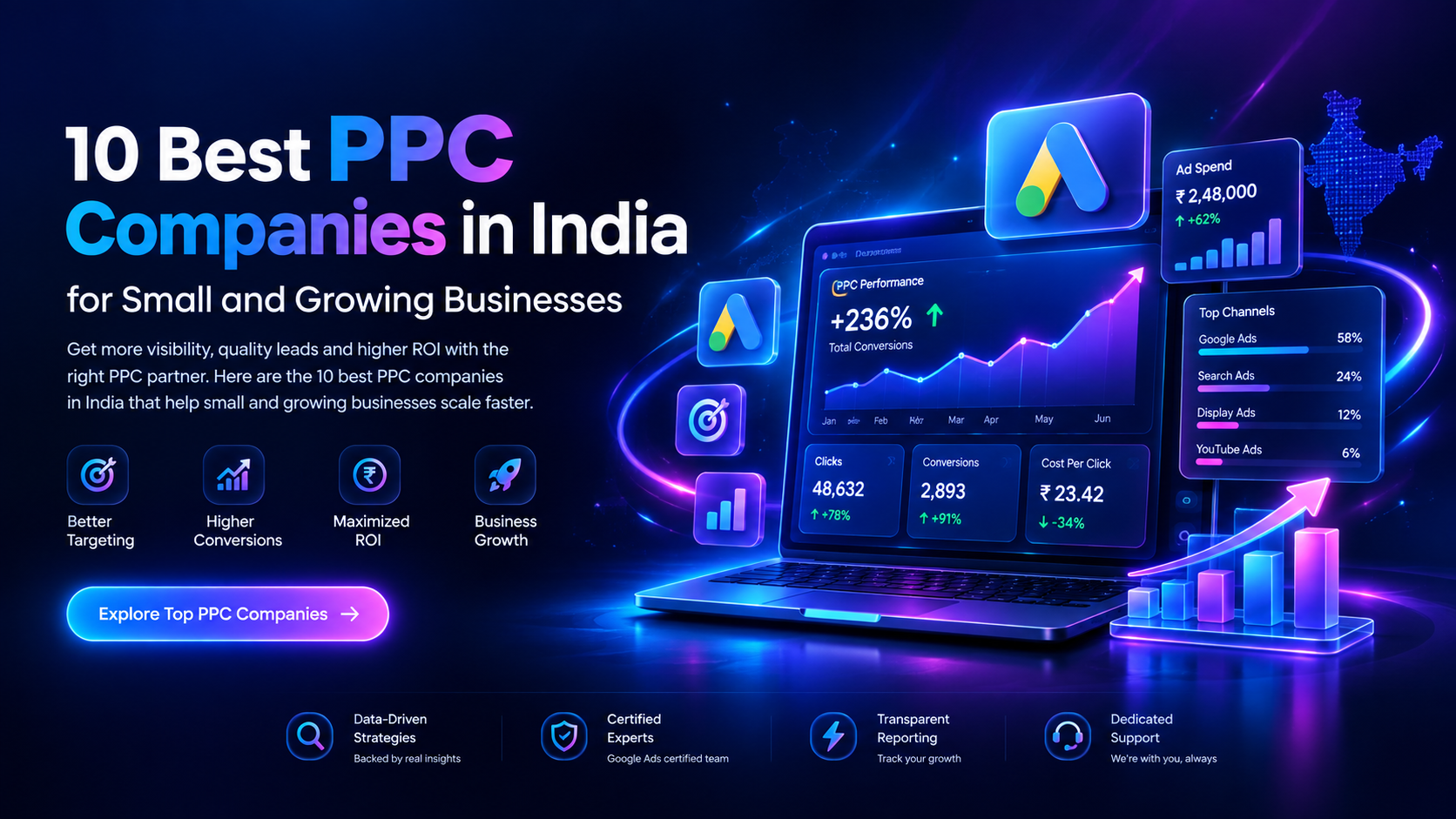

It can be difficult for a business to get noticed online with the level of competition we see today. PPC advertising is a way for you to generate high quality leads almost overnight. SEO and content marketing strategies take time to show meaningful results. Technoholic has helped clients see positive results with PPC advertising in a short period of time. In this guide, we will provide you with a thorough understanding of what PPC advertising is, how it works, and the major advantages that come with it.
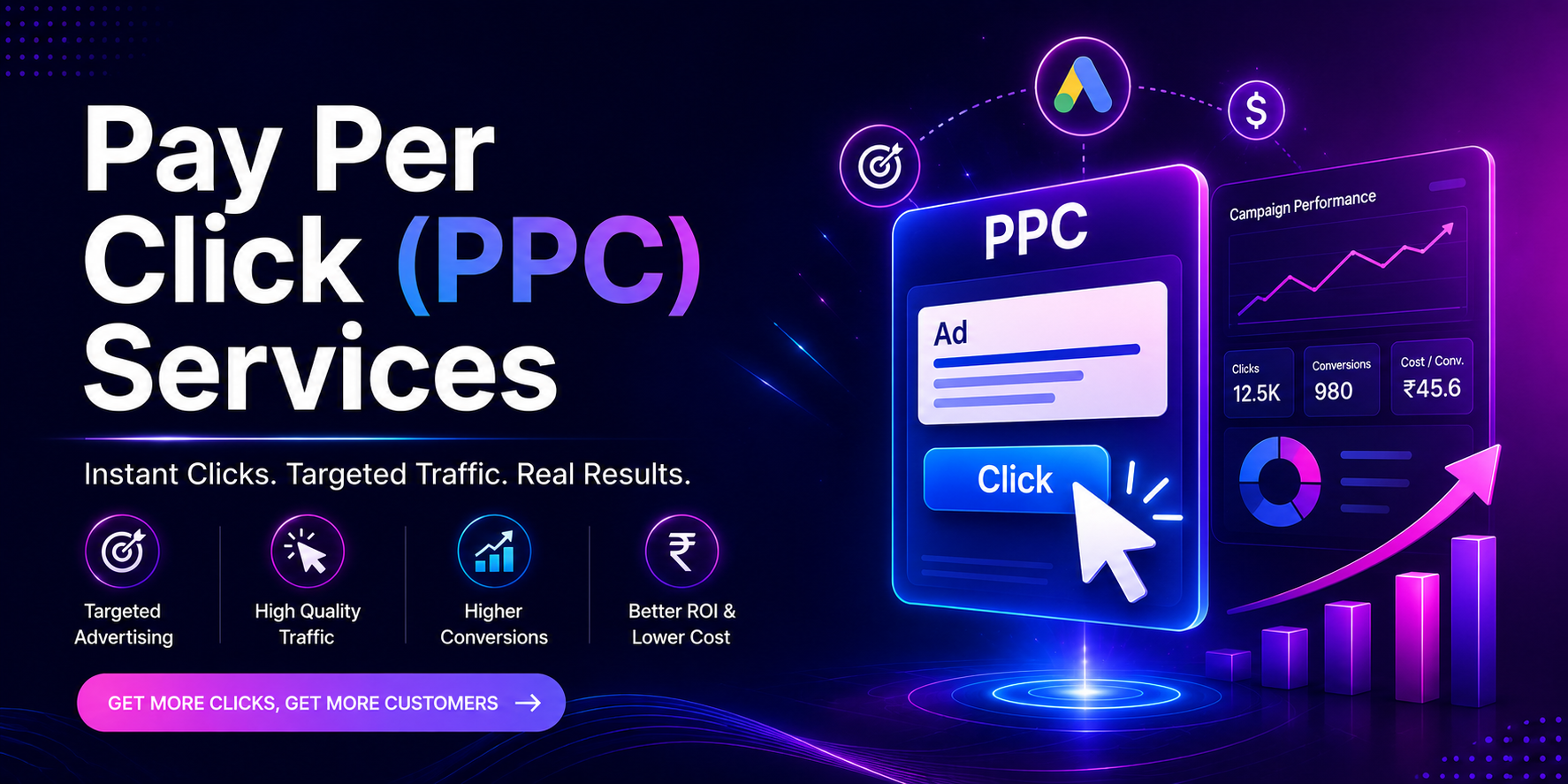
PPC advertising is an advertising model where the advertiser pays a fee for every ad that is clicked. Essentially, it means the advertiser is purchasing website visits instead of earning them through SEO. PPC ads can be found on search engines, websites, and social media networks. The objective of these ads is for a business to connect with people that are searching for products or services that a business provides.
The most well known type of PPC system is search engine marketing. Here, advertisers place bids on keywords in order to show ads to users searching terms associated with products or services they offer. Advertisers only pay for clicks. This makes PPC a powerful, cost effective method of online advertising that also lends itself to measuring performance.
At Technoholics, we see PPC as an excellent method of rapidly building visibility, traffic, and conversions, especially for quickly growing businesses looking to promote offers of an ephemeral nature.
PPC marketing uses an auction system. Here’s how it works in layman’s terms:
For every search performed, the system performs an instantaneous auction by evaluating bids placed by all advertisers for the keyword.
Unlike the highest bid estimation system, most search engines have an evaluation system to assess the relevance, quality, and expected click-through rate (CTR) of the advertisement and the destination page. This is referred to as the Quality Score.
A combination of Quality Score and bid amount gives an ad its Ad Rank. This determines placement on a search engine results page (SERP). Payment, on the other hand, occurs only after a user clicks the ad. In most cases, the bid price is lower than the amount the advertiser actually ends up paying.
This auction system gives smaller businesses a chance to win against larger businesses that can afford to spend more. This can happen with cost-efficient ad creation and landing page optimization. We take pride in this aspect at Technoholic because we emphasize quality and optimization of PPC ads over the budget size.
Google Ads may be the most popular PPC advertising platform, but there are many others to choose from depending on your ad goals and target audience.
Given the staggering number of searches, 3.5 billion to be exact, Google Ads remains the most popular choice. It has Search, Display, YouTube, and Gmail ad networks, which provides a lot of options to businesses.
Although it is an underutilized ad platform, given that Bing is also a primary search engine for many in the older demographic and for a lot of B2B searches, the cost per click is relatively low because of little competition.
Both of these social media platforms offer unparalleled ad targeting based on many variables, interests, demographics, behaviors, and life events for both brand awareness and retargeting.
Advertising to business-to-business (B2B) clients is possible on LinkedIn and is effective when targeting professionals based on their job title, industry, company size, and level of seniority.
For businesses selling products on Amazon, there is the option to run pay-per-click (PPC) advertising on Amazon’s search results. This type of advertising is useful for selling products with high purchase intent.
Determining the right advertising solution (or solutions) for your audience will dictate success for your campaign. Technoholic has the expertise to assist you in this decision.
Unlike other forms of advertising that may take time and effort to generate and produce results, PPC’s visibility is nearly instant. This is appealing for clients looking to sell a newly released product or to promote a time-bound special.
With PPC, businesses have analytics they can refer to for impressions, clicks, conversions, and cost per acquisition. This information is useful and flexible enough to be used for the continuous optimization of a PPC campaign.
Advertisers can set limits on their daily and monthly budgets. Traditional advertising lacks flexibility like PPC.
Clients have the ability to maximize their advertising dollar with the possibilities of targeting users in a specified location, demographic, or with specific interests. PPC is able to minimize waste of advertising dollars and maximize the conversion rate.
Even if users do not click an ad, having your brand listed in a prime location on a search engine result is a long-term strategy for brand building.
Harnessing local search results, methodical ad campaigns and carefully selected long-tail keywords balanced against tight budgets are strategies Technoholic offers to small and medium businesses looking to target the same clientele as large corporations.
The different advertising structures and models, in particular the specific bidding mechanisms, are essential for finding the appropriate model for the business objective.
PPC (pay per click) campaigns require more than just keyword selection and the establishment of an ad budget. Optimizing a campaign for maximum return on investment (ROI) requires several value-adding techniques, including the following.
Objective setting is crucial in establishing what defines the success of the campaign. These objectives define the strategies and the metrics used to evaluate the success of the campaign. Some example objectives include targeted lead generation, increasing sales, and driving app downloads.
Communicate value, a strong call to action, and grab the user’s attention with your ad copy. Try A/B testing different headlines and descriptions to see how your audience interacts with the different variations.
When users click on your ads, you don’t want them to just land on a generic page, you want to build a specialized landing page that matches the ad, loads quickly, and has a clear and simple call to action.
Ad extensions include sitelinks, callouts, and structured snippets. Use them! They are easy ways to add more information to your ads, and increase their visibility and click through rates.
PPC needs some ‘elbow grease.’ Keep an eye on how your keywords are performing and adjust your bids to optimize your budget’s value.
Most visitors don’t convert right away, use retargeting campaigns to reach out to users that previously showed interest in your page!
Set-up conversion tracking! If you don’t, you won’t know what keywords, ads, or campaigns are even bringing in revenue!
Even the most experienced marketers are susceptible to losing effectiveness with some of the traps below. At Technoholic we see the following issues the most:
Analyzing performance data is the only way to avoid such common mistakes.
The PPC landscape has largely relied upon machine learning and automation – Google advertising, for instance, now has bid automation strategies such as Target CPA, Target ROAS and Maximize Conversions. While the use of automation accelerates workflow, professional knowledge and the ability to strategize is still of utmost importance in certain facets of business such as campaign structure, audience segmentation and strategy development. Automation along with strategy, induced by Technoholic, has proven to be the most practical and effective approach
Some KPIs to measure a PPC campaign’s success are: Click Through Rate (CTR), Conversion Rate, Cost Per Click (CPC), Cost Per Acquisition (CPA).
Analyzing these metrics determines a campaign’s performance, eliminates poor performing elements, and reallocates available spending toward superior performing ads.
Successful Pay Per Click (PPC) campaign management necessitates a blend of creative thinking, continuous testing, and understanding of consumer behavior, beyond the technical proficiency. Technoholic’s focus is on the client and centered on the variables of the project, as well as our client’s unique needs and growth opportunities.
Most PPC campaign managers will take a cookie-cutter, one-size-fits all approach to a new project. We take time to understand the business, the audience they serve, the competitive edge and define the project goals to develop a campaign strategy. This approach is backed with heavy optimization, reporting, and a keen focus on ad spend.
Pay Per Click (PPC) marketing is one of the most effective and efficient digital marketing channels available to all sizes of businesses. It allows ultimate control of campaign visibility, targeting, and is backed by robust campaign data performance. It takes strategy and a good deal of optimization to succeed in Pay Per Click marketing. This is where many businesses may lose their edge, but ultimately PPC marketing success is measured by the quality of data that defines the campaign.
Whether it’s your first time searching for leads or you’re a growing business, understanding how Pay Per Click (PPC) advertising works is critical for any company to successfully use additional strategies in the long run. Having a stellar PPC advertising strategy, along with a partner like Technoholic, will let PPC advertising become a scalable source of growth for your business.