Running your own Google Ads account seemed simple enough at first. Then the budget started disappearing, the click-through rate looked fine but sales didn’t move, and suddenly you’re three tabs deep into forum threads at midnight trying to figure out why your Quality Score tanked. If that’s where you’re at, you’re not failing at PPC. You just haven’t handed it to someone who does this full-time.
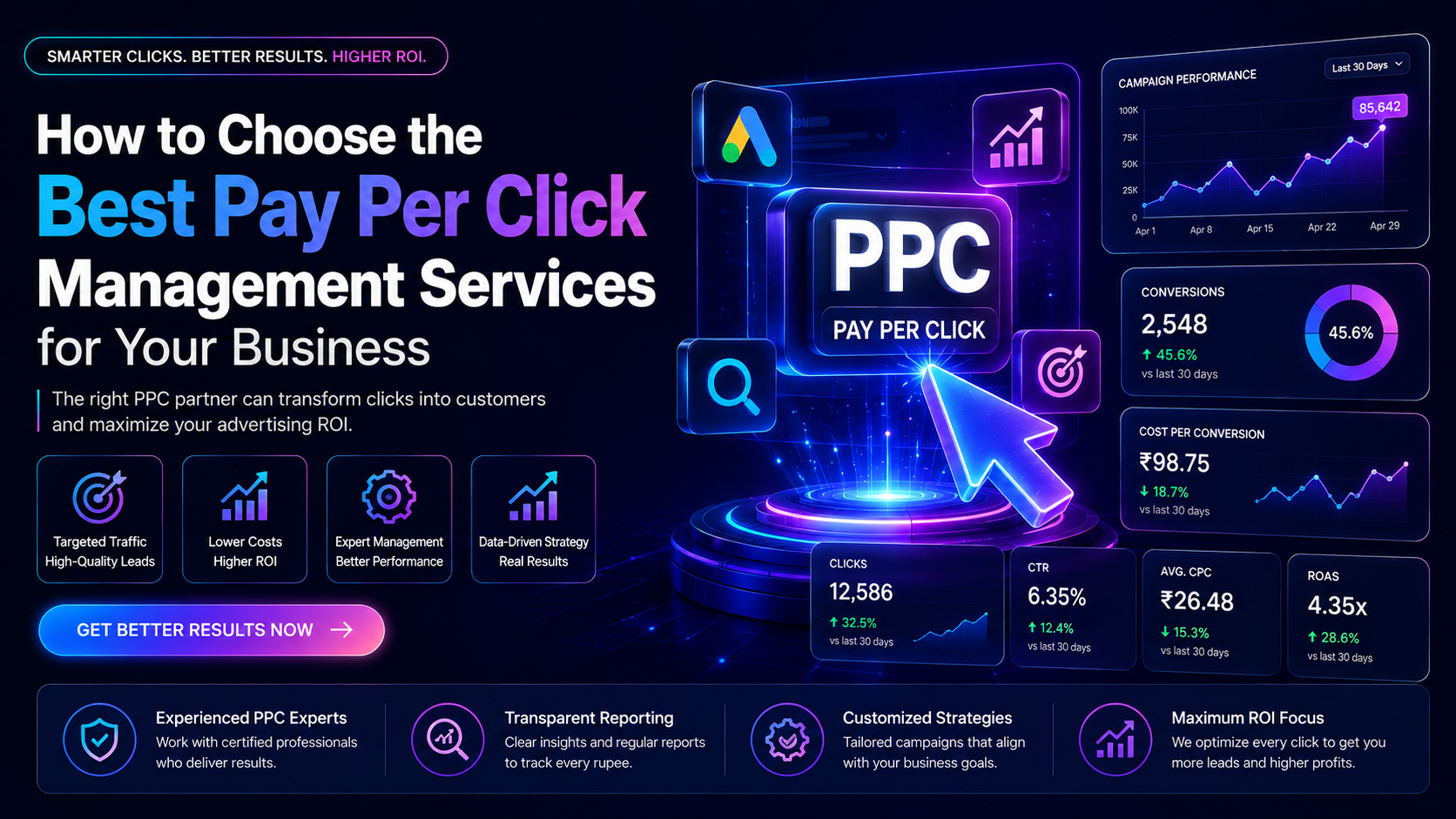
That’s the whole case for hiring a pay-per-click management service in the first place. Done right, it’s the difference between burning cash on clicks that go nowhere and building a channel that actually predicts revenue. Done wrong — and there’s a lot of “wrong” out there — it’s just a more expensive way to waste money, except now someone’s charging you a management fee on top of it.
So how do you actually pick a good one? Let’s get into it.
What a PPC Management Service Actually Does
Before comparing agencies, it helps to know what you’re paying for. A proper PPC service isn’t just someone who logs into your Google Ads dashboard and raises bids when performance dips. It covers account structure and campaign strategy, keyword research and negative keyword lists (which matter more than people realize — bad negative keyword hygiene is where a lot of budgets quietly leak away), ad copywriting and testing, landing page feedback, bid management, conversion tracking setup, and ongoing reporting that ties spend back to actual business outcomes, not just clicks and impressions.
Some agencies also handle Meta Ads, Microsoft Ads (which, honestly, gets ignored way too often and can be cheaper per click in a lot of B2B categories), and programmatic display alongside Google. Others specialize purely in search. Knowing which one you need depends on where your customers actually spend time — not where it’s trendiest to advertise.
Why the Wrong Choice Costs More Than a Bad Ad
Here’s what nobody tells first-time buyers of PPC services: a mediocre agency doesn’t just fail to improve your results. It actively makes decisions with your money that a careless intern with dashboard access could’ve made just as easily. Broad match keywords left unchecked. No negative keyword lists. Generic ad copy copy-pasted across ten clients in the same industry. Conversion tracking that was set up once, eighteen months ago, and never touched again even though your website’s changed twice since.
Multiply that by months of ad spend, and you start to see why picking carefully matters so much more than picking quickly.
Key Things to Look For
Start with transparency. A trustworthy service will give you full access to your own ad accounts — you should never be locked out of your own Google Ads or Meta Ads dashboard. If an agency insists on managing everything under their own master account with no visibility for you, walk away. That’s your data and your budget; you’re entitled to see exactly where it’s going.
Ask about reporting cadence next. Weekly check-ins are common, but what actually matters is whether the reports connect ad spend to real business metrics — leads, sales, cost per acquisition — rather than vanity numbers like impressions or click-through rate in isolation. A high CTR with no conversions isn’t success. It’s just an expensive way to get attention.
Industry experience matters more than people give it credit for. An agency that’s run campaigns for e-commerce brands for years might genuinely struggle with a B2B SaaS account where the sales cycle is three months long and the “conversion” happens off-platform entirely, in a sales call. Ask for case studies or examples from businesses similar to yours — not just any client, but ones in a comparable space with a comparable funnel.
Pricing structure is worth understanding upfront too. Some services charge a flat monthly fee, others take a percentage of ad spend, and a few work on a hybrid or performance basis. None of these is automatically better than the others, but a percentage-of-spend model can occasionally create a subtle incentive to keep raising your budget rather than optimizing what you already have — so it’s fair to ask directly how they think about that.
And don’t skip the contract terms. Month-to-month arrangements tend to signal an agency that’s confident in its own results. Long lock-in contracts, especially with steep cancellation penalties, are sometimes a sign the agency knows it needs time to hide mediocre performance behind a “these things take time” excuse.
Questions Worth Asking Before You Sign
A short conversation up front can save months of wasted spend later. Ask how they’d structure your first ninety days specifically — not generically, for your business. Ask who’ll actually be managing your account day to day, since some agencies sell you on a senior strategist during the pitch and then hand your account to a junior team member the moment the contract’s signed. Ask what tools they use for tracking and reporting, and ask them to walk you through a real (even if anonymized) example of a campaign they turned around, including what was broken and how they fixed it.
If the answers feel vague, generic, or rehearsed, trust that instinct. A team that actually knows PPC can talk specifics without hesitating.
A Few Warning Signs
Guaranteed results are one of the biggest red flags in this industry — nobody can promise a specific ROAS or conversion rate before they’ve even looked at your account, your market, or your competition. Auction dynamics shift, competitors change strategy, seasonality happens. Similarly, be cautious of agencies that push you toward the most expensive plan immediately without first auditing your current setup or understanding your goals. And if an agency can’t clearly explain why they’d recommend a particular platform or strategy for your specific business — beyond “it works for everyone” — that’s usually a sign they’re running the same playbook for every client, regardless of fit.
Making the Decision
There’s no single “best” PPC management service across the board — a boutique agency like Technoholic might be a stronger fit for a growing local business that wants close, hands-on attention, while a larger firm might suit a business already running six-figure monthly ad spend across multiple platforms. What matters most is finding a partner whose reporting is honest, whose strategy actually fits your sales cycle, and who treats your budget the way they’d treat their own.
Start with a smaller trial period if the agency offers one, watch how they communicate when something underperforms (that tells you more than how they talk about wins), and don’t be afraid to ask hard questions before committing to anything long-term. And since ad platforms update their algorithms and policies more often than most business owners have time to track, it’s worth glancing at Google Tech News every now and then, just to stay a step ahead of changes before they quietly eat into your campaign performance.