Ask ten different PPC agencies in India what they charge, and you’ll probably get ten different answers — some vague, some suspiciously specific, and a couple that dodge the question entirely until you’re on a call with a “growth consultant.” That’s frustrating if you’re just trying to budget properly before you commit to anything. So let’s actually break this down: what businesses typically pay, why the range is so wide, and how to tell if a quote is fair or just padded.
The Short Answer (With a Big Asterisk)
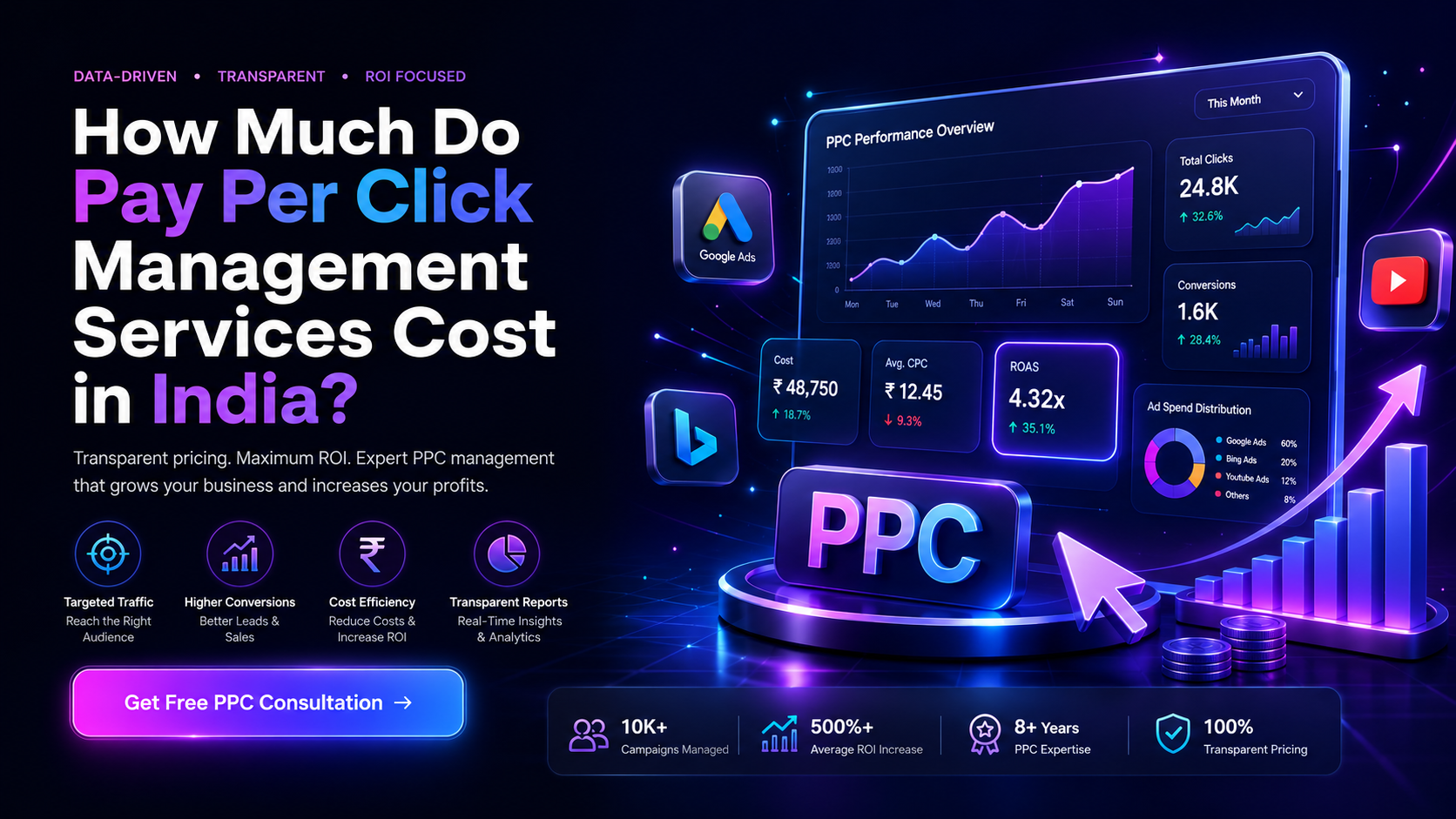
Most PPC management services in India charge somewhere between ₹15,000 and ₹1,00,000+ per month, depending on ad spend, platform complexity, and the scope of work involved. Small local businesses running a modest Google Ads campaign might land on the lower end. Larger companies running multi-platform campaigns — Google, Meta, LinkedIn, programmatic — with serious monthly ad budgets will sit well above that.
That range is wide on purpose, because “PPC management” isn’t one standardized service. It’s a bucket term covering everything from a freelancer tweaking bids twice a week to a full agency team handling strategy, creative, tracking, and reporting across five platforms simultaneously.
The Common Pricing Models
Agencies in India generally price their services one of a few ways, and each has trade-offs worth understanding before you sign anything.
The flat monthly fee model is exactly what it sounds like — a fixed retainer regardless of how much you spend on ads. This works well for businesses that want predictable costs and don’t want their management fee ballooning as ad spend scales. Then there’s the percentage-of-ad-spend model, typically somewhere between 10% and 20% of your monthly budget, which is popular because it scales naturally with your business — though, worth mentioning, it can occasionally nudge an agency toward encouraging more spend rather than better efficiency. A performance-based model exists too, tying fees to results like leads or conversions, though it’s less common because most agencies aren’t willing to take on that much risk unless they’re extremely confident in the account.
Some agencies also mix models — a smaller flat base fee plus a percentage once spend crosses a certain threshold. Honestly, none of these is objectively “the best” one. It really depends on your budget size and how much predictability you want.
What Actually Drives the Price Up or Down
Ad spend is the biggest factor, obviously — managing a ₹5 lakh monthly budget across multiple campaigns takes more strategic oversight than managing ₹30,000 on a single search campaign. But it’s not the only thing. Platform count matters too. A business running only Google Search Ads pays less than one running Google, Meta, and LinkedIn simultaneously, since each platform needs its own strategy, creative approach, and optimization rhythm.
Industry competitiveness plays a role as well. Real estate, finance, insurance, and legal services tend to have expensive cost-per-click rates because of how competitive the auctions are, and agencies managing these accounts often charge more given the complexity and higher stakes involved. Account complexity — think e-commerce stores with thousands of SKUs versus a service business with five core offerings — also shifts pricing, since more products or services usually means more granular campaign structuring.
And then there’s simply the agency’s own positioning. A boutique agency with a small, senior team, like Technoholic, might price differently than a large agency running dozens of accounts through junior staff. Neither is automatically better — it depends what kind of attention and expertise you actually need.
Freelancers vs Agencies vs In-House
Freelancers are usually the cheapest route, often charging a flat monthly fee well below what an agency would ask, and for a small business with a limited budget and simple campaign needs, that can genuinely be enough. The trade-off is bandwidth. A single freelancer juggling multiple clients might not give your account the attention it needs during a critical launch or a sudden performance dip.
Agencies cost more but bring a team — strategists, ad copywriters, sometimes dedicated analysts — which matters more once your ad spend and complexity grow past what one person can reasonably manage alone. In-house hiring is the most expensive option on paper, factoring in salary, tools, and training, but for businesses running very large, ongoing ad budgets, it can eventually make sense financially, plus it keeps institutional knowledge inside the company instead of walking out the door if an agency relationship ends.
There isn’t a universally “right” choice here. It genuinely depends on your budget, how fast you’re growing, and how hands-on you want to be.
Red Flags in Pricing (Beyond Just the Number)
A price that seems too low relative to your ad spend is worth questioning — sometimes it means the agency is spreading itself thin across too many clients, or worse, barely touching your account after the initial setup. On the flip side, a suspiciously high quote with vague deliverables and no clear explanation of what’s included should raise questions too. Ask exactly what’s covered: campaign setup, ongoing optimization, reporting frequency, creative production, landing page consultation — get specifics, not just a number on a proposal.
It’s also worth asking whether the quoted fee includes ad spend or sits entirely separate from it. This trips up a surprising number of first-time buyers, who assume the management fee covers everything, only to realize later that the actual media budget is a completely separate line item.
What a Fair Quote Actually Looks Like
A reasonable quote should connect clearly to scope — how many platforms, how many campaigns, what level of reporting, and how much hands-on strategy is involved — rather than being a flat number pulled out of thin air. It should also come with some explanation of what you get for that money, not just the figure itself. If an agency can walk you through exactly where their fee goes and why it makes sense for your specific business, that’s usually a decent sign you’re dealing with people who know what they’re doing rather than just quoting a standard rate card to everyone who calls.
Bottom Line
There’s no single “correct” price for PPC management in India, because the service itself varies so much based on scope, platform, and who’s actually managing your account day to day. Get quotes from a few different providers, compare not just the number but what’s actually included, and don’t be afraid to ask pointed questions about how they price and why. And since ad platform algorithms and pricing structures shift fairly often, it’s worth keeping half an eye on Google Tech News every so often, just so you’re not caught off guard when something changes mid-campaign.